Our method is a technology for accelerated rabbit rearing, known as acceleration. The technology combines three things: a special mini-farm cage, selected animals, and a feeding and care routine. At the KrolikoFerma farm, rabbits are kept according to this method. Below we describe its principles in plain language.
Key principles
- Kits stay with their mother. Young rabbits are not weaned early. They grow up next to the doe and receive her milk much longer than under conventional housing. The authors of the method consider this the main source of fast growth.
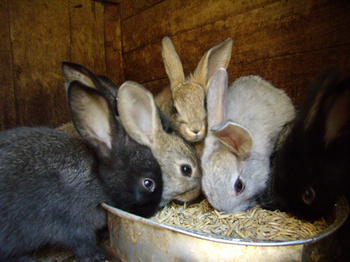
- Feed and water at all times. Hopper feeders and drinkers are filled so that the animals can eat and drink freely at any time of day or night.
- Warm water in winter. The drinkers are heated, the water does not freeze, and the rabbits drink as much as they need even in frost.
- Clean air and a dry floor. Manure and urine pass through the mesh floor and a chute into a closed collector, while the air in the cage moves from top to bottom. The animals have less contact with fumes.
- Minimal manual labour. The mini-farm is designed so that one person can look after many animals. Feeders are filled once every few days, and manure is removed together with the collector.
How the mini-farm is built
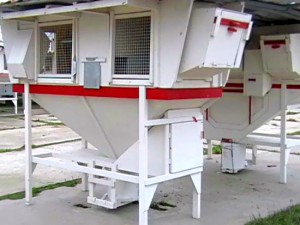
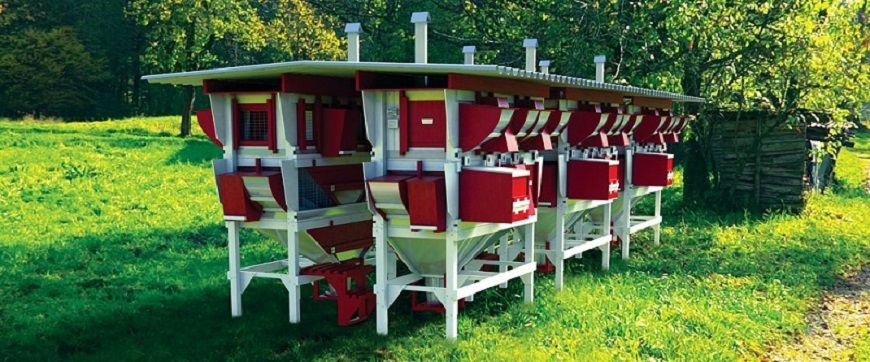
A mini-farm is a multi-tier structure under a common roof. In the standard version:
- Upper tier: sections for does with litters. They have a nesting compartment where nest heating can be switched on in winter.
- Lower tier: sections for fattening young rabbits after weaning.
- Hopper feeders for pellets and grain and hay racks.
- Heated automatic drinkers.
- A manure chute and collector under the cages.
Mini-farm models differ in size and number of sections. For more on the designs the farm uses, see "Mini-farm cages for rabbits".
Feeding
The diet is based on hay, grain and grain mixes, and pelleted feed. In summer green grass is added, in winter succulent feeds and root vegetables. Feed must be of good quality: mould, rot and sudden changes in diet are dangerous for rabbits under any technology. What exactly the animals on our farm receive is described in the article "Rabbit feeds".
What to expect from the method
Supporters of the method point to fast growth of young rabbits, juicy meat and considerable labour savings. Specific results (fattening time, live weight, number of kits) depend on the animals, feed, climate and how precisely the technology is followed. That is why we do not quote "guaranteed" figures: real performance is best seen on working farms.
Limitations and requirements
- Mini-farms cost more than ordinary cages, and building them requires precision.
- Electricity is needed to heat drinkers and nests in winter.
- The method is designed for animals that tolerate this regime well. Selection and pedigree records are required.
- As with any housing system, veterinary prevention and quarantine of new animals are mandatory.
Where to start
Before buying equipment, see how a working farm operates, calculate feed and sales, and start with a small herd. Tips for beginners are collected in the article "How to start rabbit farming". For technology transfer and partnership, see the "Franchise" page.